How to Get Admission into a Good MBA College with a Low CAT Score (or MBA Admission Without CAT)

Got a disappointing CAT percentile, or skipped the exam altogether? Take a breath. Your MBA dream is not over. Every year, thousands of students secure seats in reputed B-schools with a low CAT score or without CAT at all. This guide explains exactly how to get MBA admission with a low CAT score, which alternative exams to consider, and how to build a profile that colleges want.
Is It Possible to Get MBA Admission with a Low CAT Score?
Yes. CAT is the gateway to the IIMs and a few top-tier institutes, but India has hundreds of AICTE-approved B-schools that accept other entrance exams or admit students through their own selection process. The key is to look beyond CAT and play to your strengths: academics, work experience, communication skills and certifications.
Top Alternatives to CAT for MBA Admission
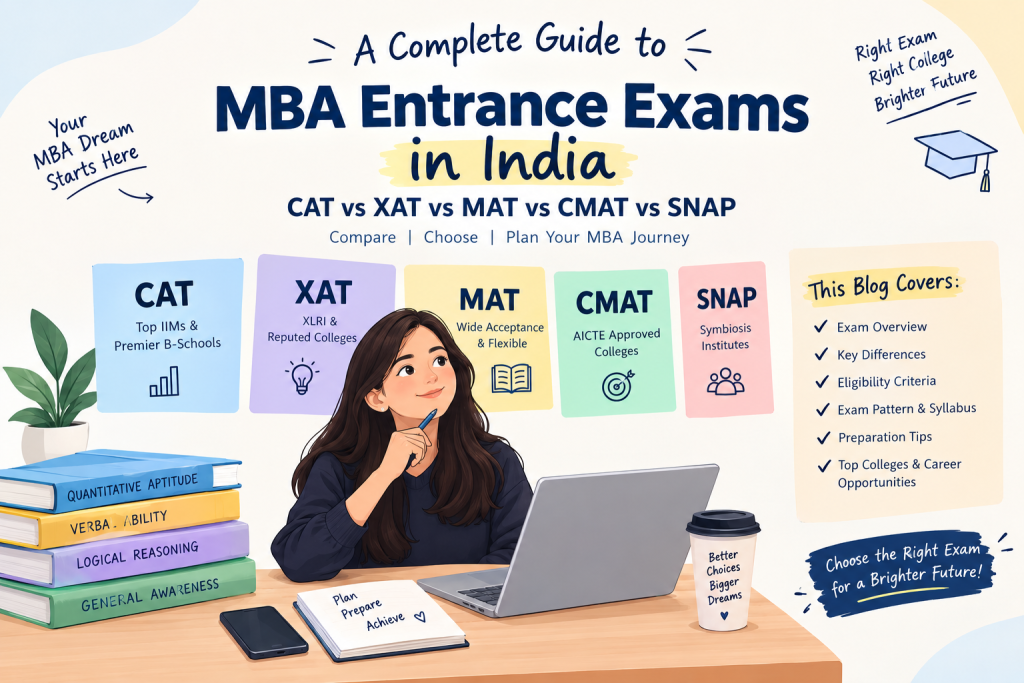
If your CAT percentile is low, these exams can open the doors to excellent MBA and PGDM programs:
- XAT (Xavier Aptitude Test): Accepted by XLRI, XIMB, and 160+ institutes. Its decision-making section rewards situational judgment, so it is a great second chance.
- CMAT (Common Management Admission Test): Conducted by NTA and accepted by 1,000+ colleges. A good CMAT score can fetch you admission to many reputed institutes.
- MAT (Management Aptitude Test): Held multiple times a year, so you can retake it and improve.
- SNAP: For Symbiosis group institutes, including SIBM Pune and SCMHRD.
- NMAT by GMAC: For NMIMS and other leading schools. It allows up to three attempts in one cycle.
- GMAT: Accepted by top Indian and international business schools, and ideal if you have work experience.
- State-level exams: MAH-CET, TANCET, KMAT, APICET, TSICET and others for state colleges.
Tip: Apply to several exams in the same cycle. A weak CAT does not stop you from scoring well in XAT, CMAT or NMAT.
MBA Admission Without CAT: Options That Work
Many good colleges accept students on the basis of their own tests and interviews, or on other profile-based criteria.
1. Management Quota and Direct Admission
Some private universities offer management quota seats. Always verify that the college is UGC/AICTE-approved and check its placement record before you pay any fee.
2. Institute-Level Entrance Tests
Several B-schools conduct their own written tests followed by group discussion and personal interview (GD-PI), for example IIFT’s former pattern, GIM, and various university-level tests.
3. Work-Experience-Based Admission
Programs such as executive MBA or PGPX place strong weight on years of experience, leadership roles and achievements, and sometimes waive entrance exams.
4. Online and Distance MBA
UGC-entitled universities offer online MBA programs with flexible admission, often based on graduation marks. These suit working professionals.
How to Build a Strong Profile with a Low CAT Score
B-schools look at the whole candidate, not just one number. Here is how to strengthen your application:
- Score well in GD-PI. Many colleges give GD-PI 30-40% weight in the final selection. Practice speaking confidently, structuring answers and staying updated on current affairs.
- Highlight internships and work experience. Real-world exposure in marketing, finance, operations or HR sets you apart from higher-percentile candidates with none.
- Add relevant certifications. NISM, Google Ads, Excel, data analytics and similar credentials show initiative and practical skills.
- Write a compelling Statement of Purpose (SOP). Explain your career goals, why you want that specialization and why that college. Be honest and specific.
- Maintain good academic records. Strong 10th, 12th and graduation marks can balance a modest entrance score.
- Show extracurricular achievements. Competitions, leadership roles, case-study wins and projects add weight.
- Prepare for diversity factors. Some colleges give extra weightage for gender diversity, academic diversity (such as science, arts, commerce) and work experience.